
A résumé says “advanced English” and “CRM experience.” By week two, you find out the English works in writing but not on a call, and the CRM they knew looks nothing like yours. The problem isn’t the person: it’s that no one checked what the paper promised. That’s what vetted talent solves: the candidate’s skills are verified before you meet them, not after they start working with you.
What vetted talent is and what it isn’t
Vetted talent is a candidate whose identity, track record and skills have been confirmed with tests and evidence, not just with what they say about themselves. The difference from a screened résumé is fundamental: screening means ruling out profiles that don’t meet the requirements on paper; vetting means confirming that the ones left can actually do the job.
That’s why, when a provider says they’ll send you “pre-selected profiles,” it’s worth asking what exactly that means. Pre-selecting can mean reading résumés. Vetting requires tests.
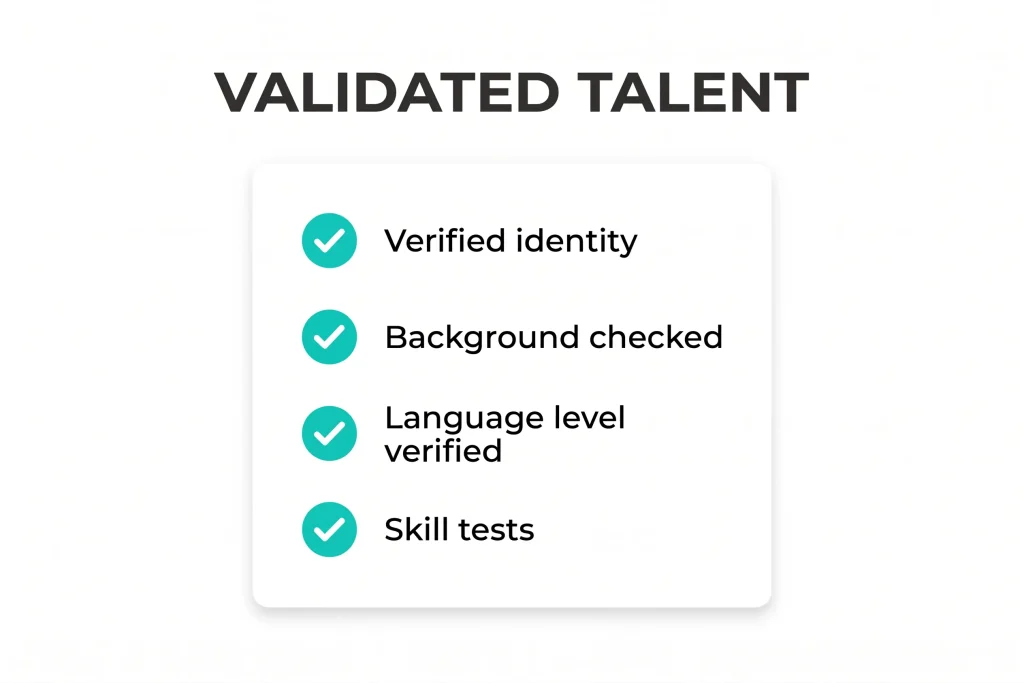
The four checks and the risk each one closes
At AVO, every candidate goes through identity verification, background and reference checks, role-specific technical tests and spoken and written English validation, as described in our methodology. What matters is understanding what each one protects:
Identity verification
It confirms the person is who they say they are. It sounds basic, but it’s the foundation for everything else: you’re going to give them access to your email, your CRM or your clients. To go deeper into how that information is protected once the assistant starts, this guide covers confidentiality when you delegate.
Background and reference checks
A résumé tells you what the person wants to highlight; references tell you how they actually worked. This check closes the risk of an inflated track record and adds something no interview can: the perspective of someone who has already worked with the candidate.
Role-specific technical tests
This is where claims become proof. Tests are tailored to the role: if the job requires managing a CRM or preparing reports, the test measures that, not general knowledge. It’s the check that most reduces surprises in the first weeks.
Spoken and written English validation
Writing a good email and holding a call with a client are different skills. Validating both separately avoids the most common case: English that looks great in writing and falls short in conversation.
Before any of this, the free diagnostic call defines the psychometric tests, language level and experience the role requires, so vetting measures what your operation actually needs.
Why vetted talent changes your results
The most visible effect is on your own interview. If the basics are already confirmed, you don’t need to spend the conversation checking whether the candidate can use a tool or speaks English. You can focus on what only you can assess: whether they fit your way of working, your pace and your team. To make the most of that time, these 12 questions to ask your virtual assistant will help you use it well.
The second effect is on continuity. A profile that arrives with proven skills is less likely to be a poor fit, and every replacement you avoid is an onboarding process you don’t have to repeat.
What vetting doesn’t replace
Vetting reduces risk, but it doesn’t eliminate it, and that’s worth saying plainly. Three things still depend on more than vetting:
- Your decision. You receive candidates who are already vetted, but you interview them and choose. Vetting confirms they all have the skills for the job; you decide who fits best.
- Good onboarding. Even the best profile needs clear processes, well-defined access and time to learn how your operation works.
- Follow-up. After the start, AVO monitors performance and, if the profile doesn’t fit, a review is triggered and, if needed, a replacement is arranged. This guide covers the guarantees when hiring a virtual assistant.
If you’re comparing providers, how each one vets talent is the first criterion you should review. This guide on how to choose a virtual assistant company covers what to ask and which red flags to watch for.
Frequently asked questions about vetted talent
Is vetting the same as screening résumés?
No. Screening means ruling out profiles that don’t meet the requirements on paper. Vetting means confirming, with tests and references, that the remaining candidates can do the job.
Can I interview the candidate even if they’re already vetted?
Yes. Vetting confirms skills; the final decision on who joins your team is yours, after you interview the candidates.
What happens if the profile isn’t a fit after they start?
AVO monitors the performance of the assigned talent. If the assistant doesn’t adapt to the required profile, a review process is triggered and, if needed, a replacement is arranged.
Want to receive candidates who are already vetted for your operation? Get your proposal in 24 hours with AVO.